
About Me
About Me
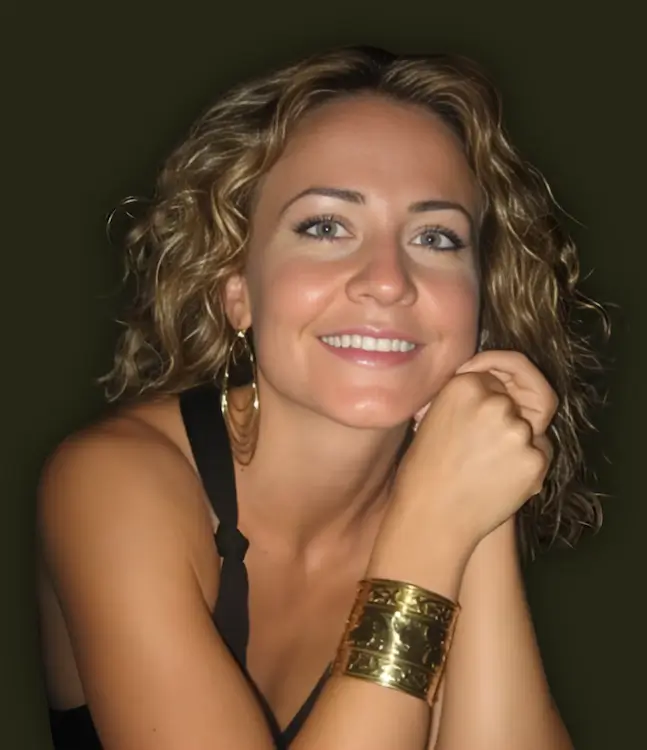
My first career was as a stage and film actress. Performing felt like medicine. The transformation, the discipline, the way I could step inside a character and out of my own life for a brief moment. I loved it.
It was also, as I now understand, a very clever Flight survival response. A nervous system that had learned, early, that being someone else was safer than being myself. Who knew that my natural gifts could also become my protective shield? From the outside — talent; from the inside — a wound finding the most accessible place to hide.
After the stage, I spent fifteen years in the corporate world. And honestly? That’s where my survival patterns really got to shine.
My Flight pattern went into overdrive — the overachiever, the one who stayed late, who took on more, who ran toward the next goal the moment she’d reached the last one. And my Fight pattern gave me the cojones to stand up and speak up in rooms built for men. I got the promotions. I got the recognition. I got the validation I thought I’d always wanted.
So why did it feel so hollow?
Here’s a part nobody tells you about the healing journey: trying hard doesn’t make it work. And I tried HARD, for twenty years. I went to therapy. I read the books. I did the retreats. I sat in the circles. I got certified in more healing modalities than I can count — energy work, hypnotherapy, somatic practices, coaching, meditation, neuropsychology of trauma. I felt like I would take two steps forward and then three steps back.
Looking back now, I can see why. I was treating healing like a to-do list. A pass/fail assignment. Something you could get right if you just worked hard enough and found the right method.
So I kept searching and trying.
And then I remembered something my acting teacher told me when I was nineteen years old: “You know, Sara — you’d be a great actress if you just let go.” That concept utterly confounded me. I thought to myself: “Let go? Ok. How do you do that? How do you do ‘letting go’? Just show me how and I’ll do it.”
Twenty years later, it was finally dawning on me what he meant — this isn’t another thing to do. It’s not a technique to master or a trophy to hang on the wall. It’s quite the opposite — it’s the willingness to put the trophies down. To stop running from the painful parts of yourself and turn toward them instead. To let every part of you — especially the painful, shameful parts you’ve been trying to exile — know that they too deserve to be loved, to be seen, to be safe.
There are methods that make it easier to get there. I learned them, and I teach them. But the real shift wasn’t a method. It was a choice — to stop seeing my pain as something to fix, and start seeing it for what it actually was: a quiet, persistent call from within, showing me exactly what I needed to feel safe, to feel loved, to come home to myself.
My first career was as a stage and film actress. Performing felt like medicine. The transformation, the discipline, the way I could step inside a character and out of my own life for a brief moment. I loved it.
It was also, as I now understand, a very clever Flight survival response. A nervous system that had learned, early, that being someone else was safer than being myself. Who knew that my natural gifts could also become my protective shield? From the outside — talent; from the inside — a wound finding the most accessible place to hide.
After the stage, I spent fifteen years in the corporate world. And honestly? That’s where my survival patterns really got to shine.
My Flight pattern went into overdrive — the overachiever, the one who stayed late, who took on more, who ran toward the next goal the moment she’d reached the last one. And my Fight pattern gave me the cojones to stand up and speak up in rooms built for men. I got the promotions. I got the recognition. I got the validation I thought I’d always wanted.
So why did it feel so hollow?
Here’s a part nobody tells you about the healing journey: trying hard doesn’t make it work. And I tried HARD, for twenty years. I went to therapy. I read the books. I did the retreats. I sat in the circles. I got certified in more healing modalities than I can count — energy work, hypnotherapy, somatic practices, coaching, meditation, neuropsychology of trauma. I felt like I would take two steps forward and then three steps back.
Looking back now, I can see why. I was treating healing like a to-do list. A pass/fail assignment. Something you could get right if you just worked hard enough and found the right method.
So I kept searching and trying.
And then I remembered something my acting teacher told me when I was nineteen years old: “You know, Sara — you’d be a great actress if you just let go.” That concept utterly confounded me. I thought to myself: “Let go? Ok. How do you do that? How do you do ‘letting go’? Just show me how and I’ll do it.”
Twenty years later, it was finally dawning on me what he meant — this isn’t another thing to do. It’s not a technique to master or a trophy to hang on the wall. It’s quite the opposite — it’s the willingness to put the trophies down. To stop running from the painful parts of yourself and turn toward them instead. To let every part of you — especially the painful, shameful parts you’ve been trying to exile — know that they too deserve to be loved, to be seen, to be safe.
There are methods that make it easier to get there. I learned them, and I teach them. But the real shift wasn’t a method. It was a choice — to stop seeing my pain as something to fix, and start seeing it for what it actually was: a quiet, persistent call from within, showing me exactly what I needed to feel safe, to feel loved, to come home to myself.
Training & Education
Education & Training